Comparing the two most hotly anticipated reboots of 2015


In the year 2015 we saw an amazing phenomenon: a world-renowned artist sold their intellectual property under dubious circumstances and an exciting sequel was released which takes place several decades after the original story, promising a fresh look at familiar characters. A shocking twist was guaranteed.
But am I talking about “Star Wars” or am I talking about “Go Set a Watchman”???????
Although I have not actually read the sequel to “Mockingbird”, that isn’t going to stop me from offering some essential critical commentary about the ‘year of the sequel’ and these two very similar but very different stories. Let’s take a look!
The “Fresh Take”

Let’s be cynical here for a moment. This is about two very popular twentieth century films (or books) being strip-mined for nostalgic moneymaking purposes even long after there is no story to tell. People may have wanted another Star Wars movie but where do you go (other than backwards) from the redemption of Darth Vader and the heroic ascent of Luke Skywalker? And I don’t think there were many clamoring for the further adventures of Jean Louise Finch (although did we even know that was a possibility)?
The ultimate results seem to bear this out. However, both sequels did promise to offer a new or different look at what came before. JJ Abrams says he was moved to direct Episode 7 by the tantalizing existential question “Who is Luke Skywalker?” and Harper Lee…didn’t say anything because she’s kind of old and not paying much attention to the world around her these days. But her publisher promised readers the exciting discovery of a long-lost manuscript which would expand and deepen our understand of the principle protagonists of “Mockingbird.”
Here’s some confusing irony: although “Watchman” was written as a draft before “Mockingbird”, it “The Force Awakens” didn’t even use Lucas’ story pre-written story treatments–Abrams and Lawrence Kasdan slapped together a screenplay in six weeks. And yet what they came up with is nearly beat-for-beat the same story as the original “Star Wars”, including an obnoxious planet destroying weapon which must be vanquished. There are “twists” in terms of familial relations and tragic deaths and whatnot but overall the plot and characters are back to square one. No evil Luke Skywalker (more on that below), no intergalactic cold war post-Vader, just bad guys fighting good guys without much context. Only this time the hero is a…
Female Protagonists
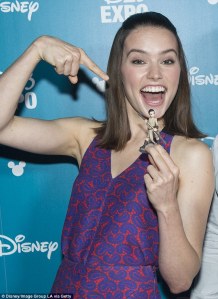
…pretty lady! Hooray for female protagonists. And “boo” on people for calling Rey _____ a “Mary Sue” character. It’s not her fault JJ Abrams wrote her dialogue! Daisy Ridley is very likable and I don’t mind she (spoilerspoilerspoiler) easily beat Kylo Ren because that guy is a stupid asshole. But is she as likable as…Scout Finch?


Scout is a great literary heroine and has the added benefit of being semi-pseudoautobiographical. In “Mockingbird”, she’s a snappy tomboy who learns how to open her mind to alternate perspectives and sympathies, culminating in the scene with Boo Radley.
Rey is a tomboy as well, although she’s kind of a babe. I suppose it’s to the film’s credit that she’s never positioned as a romantic interest, although as Mr. Plinkett noted of Padme and Episode II, shouldn’t these women be on the prowl? But if it means avoiding some dopey Liam Hemsworth side-character beefcake, that’s probably for the best. Her scene with Maz Kanata passes the Bechdel test, but fails the bullshit-plot-contrivance test, so that’s a bit of a wash.
In “Go Set a Watchman”, Scout gets a boyfriend, and…actually I don’t know. This is point at which I admit I haven’t read the book and just barely skimmed through the wikipedia summary. I’ve read at least a half dozen articles about the bizarre publication of the book, and potential reasons why, but as far as Scout goes I don’t really know what I’m talking about. Please forgive me. None of the reviewers cared about Scout anyway. They all wanted to talk about Atticus Finch.
Luke Skywalker vs Atticus Finch


Who knows what Harper Lee wanted, but the publisher of “Watchman” and producer of “Star Wars” were far more interested in milking the intrigue of a ‘fresh take’ on two of the greatest heroes of the twentieth century. They each do so in opposite ways. Which is kind of interesting.
“Watchman” sells itself by twisting our understanding of Atticus Finch on its head; the man who we thought was a paragon of moral virtue grows, in his old age, to become a ranting racist lunatic, attending Klan meetings and supporting continued segregation. How is this even possible? Supposedly that is the crux of the new book, which explores how a grown adult reconciles the sad reality of her father with the idealized image she had of him as a child. Which makes her a surrogate for the reader.
(fun fact, if you haven’t clicked the links above: “Watchman” was the ORIGINAL draft of “To Kill a Mockingbird” and Harper Lee’s editors told her to take what was just a small part of that book–memories of the trial–and turn that into a full-fledged novel, which she did)
I don’t like this take at all, but mostly for the meta-reasons that it seems like a cynical strategy to push readers’ buttons.
If Atticus, in the book and film, is an ‘unrealistic’ role model, that’s fine. I don’t care. Generations of readers haven’t seemed to care either. As evidenced by the successful campaigns of Donald Trump and the irrational hatred of Barack Obama and lots of other things, racism is alive and well in America and a “white ally” like Atticus Finch is an important model as a champion against irrational bigotry. There’s also–and this is key–not a whole lot in the original story that would indicate this is a man who, in his later years, would “turn to the dark side.” Gregory Peck plays him like a thoughtful and righteous individual, someone with measured and careful opinions. It’s very difficult (without having read the book) to even understand the motivations for why someone would fall back on communal prejudices after fighting the good fight for most of his life.
He’s also not someone you really want or need to see become “evil” (or bigoted). That in and of itself may make for a provocative reason to do exactly that, but it says more about our REAL culture than it does about racism in the book itself (or so I hear). As evidenced by the “dark”, “gritty” post-911 bent in popular film, the trend is towards tearing down our heroes. You can’t trust the government. You can’t trust anyone. There are no heroes. Everything must be deconstructed. It’s a very cynical, bleak look at the world.
This is why, somehow, some way, I’m actually quite pleased at how “Star Wars” avoided this trap (so far). Many speculated that Luke Skywalker was missing from promotional material and trailers because the big reveal of “The Force Awakens” was that he had turned evil. But not so! The reason that Luke Skywalker was missing from the toys and trailers and posters was because he was missing from the movie! He (spoiler spoiler) shows up for a non-speaking cameo at the end, teasing a Yoda-like role as mentor to Rey in the upcoming films.
The idea of archetypal heroes as “missing” rather than “turnt” from our modern age is far more compelling to me. Luke’s redemption in the new trilogy will not come from some heinous, unconvincing character betrayal, but rather from the difficulties and challenges faced from the cold, cruel galaxy. The new film contends that rather than bringing on a new age of Jedi Knights, Luke was foiled by his own nephew and essentially feels responsible for creating a new Darth Vader. There’s also rumors that the new iteration of Luke Skywalker feels more ‘powerful’ than ‘wise’ and is uncomfortable with his role as sole champion of the Force. This all feels like a genuine and ‘correct’ way to continue Luke’s storyline.

 Culture Time