In this segment I’d like to focus on the environmental science of this film and the climate-change scenario they portray.

Credit where it’s due:
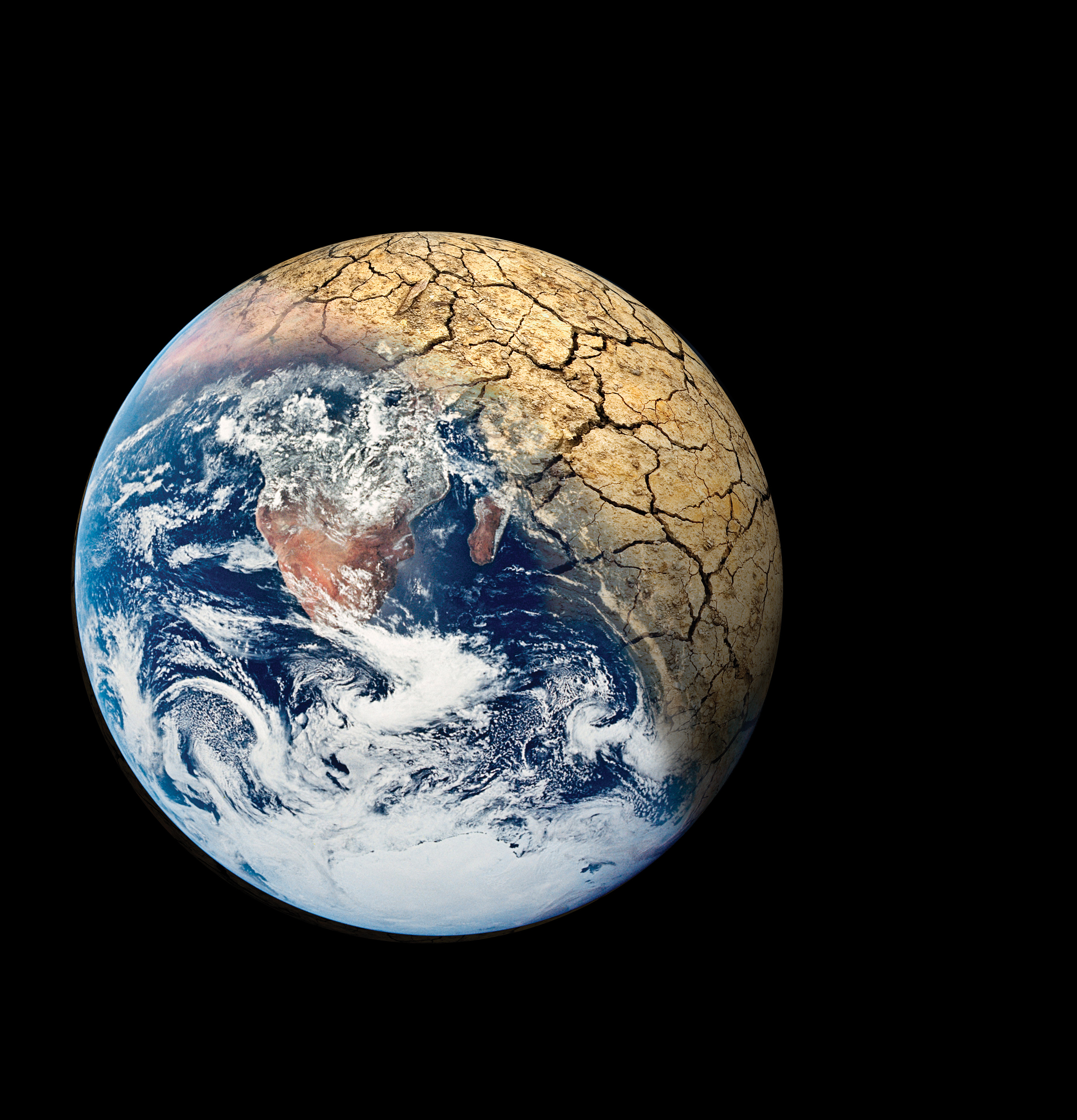
Dust-bowl conditions could happen again. And millions/billions could/would starve. Even on a decadal time scale, we will see the bread basket of America suffer from severe drought, water depletion and top soil removal, not just in the “heartland” but in California and the northern Midwest (Iowa, Minnesota, Illinois, Missouri, the Dakotas, etc). We already are witnessing the rapid (and fatal?) decline of the Ogallala Aquifer which supplies water to large swaths of corn country. People say that the dust bowl could not happen again only because we know WHY it happened and thus presumably can take steps to avoid a repeat. But those who fail to learn from the past are doomed to repeat it, and once again we are witnessing some very very unsustainable agricultural practices in this country. Eventually it is entirely conceivable that the corn belt could become extremely vulnerable to climate conditions in the next 30-50 years.

BUT
It is highly highly unlikely that crop loss and monoculture issues would exacerbate to the point where only one or two crops can be grown on planet Earth. As areas such as Oklahoma become unsuitable for crop growth, places in the northern USA and Canada will become possibly more suitable. There are also plenty of other places in the world where crop growth could take place. It is easy to imagine a future Earth where agriculture takes a bit hit and we no longer can support a population of this many people. But for the whole thing to collapse? That’s a lot trickier. It would take far more than climate change to have this scenario. We’d have to do some serious butchering of agricultural practices (not impossible I suppose) to reach a situation depicted in the film.
We will not suffocate from crop loss.
It is suggested at one point, I believe, that because of the loss of plant species which produce oxygen, the composition of the atmosphere is changing too rapidly and humans will suffocate as a result. However, this would be a near-impossible trick to pull off even within the time scale of hundreds of years. CROPS are not the same as ALL PLANT SPECIES and even if we lack crops for food, without many humans left native species would thrive again in many areas of the world, certainly enough to sustain the oxygen cycle and an atmospheric composition which can still support animal life. Also, as long as there is still water and other sources of oxygen, a small number of humans would be able to survive even in the non-existent scenario of dramatic atmospheric composition change.
We Wouldn’t Live in the Dust Bowl Anymore. Humanity Would Survive Elsewhere
It’s hard to imagine a scenario where humanity is limited to surviving in the dust bowl. Relatively large regions of the United States and Canada are expected to whether the decadal and even centennial affects climate change. The 2075 New York Yankees might be able to stay in New York after all. The idea that both coasts of the United States are no longer tenable population centers is just some Bible belter’s fever dream.
Metaphysical bullshit:
What is love?
Baby don’t hurt me.
What is gravity?
NOT another dimension. We (“humanity” at large) have a pretty good idea of what gravity is, moreso than the Nolan brothers apparently. Newton’s concept of gravity has changed since Einstein and friends but is still essentially the same concept: big bodies in space exert forces on each other. Scientists understand gravity and how it works fairly well. They are looking for a “cause” (such as the ‘graviton’ particle), and how space-time actually bends is still somewhat left to the imagination (models are tricky) but there is no possibility that a “gravity equation” could transcend space-time and that gravity is another dimension. Like the insipid suggestion that love is another dimension, it’s a fundamental misunderstanding not only of “dimensional” space but of what we DO know about these concepts.
If love can be another dimension than so can hate, shame, or that feeling you get after you’ve had a really good poopsie time.
Similarly, if gravity is another dimension, so are quantum forces, electromagnetism, weak and strong nuclear forces, etc. None of this means anything. It’s all bullshit.
The fourth dimension is a concept humans can somewhat understand, especially if we think of it as time. I have not read a lot about theorizing on extra dimensions but I do believe it is somewhat futile to visually conceptualize anything past the fourth dimension.
Actually, I take that back. The fifth dimension has been pretty clearly defined as an aspect of space-time which includes catchy pop tunes and some good covers of new-age trippy show-stoppers like “Aquarius” and “Puppet Man”.

Finally, I’m not sure if this counts as a science “mistake”, but the fate of humanity remains Earthbound. If we can’t live on this planet, we won’t be able to live anywhere. Humans evolved to require the specific conditions our planet provides and almost no technology we would utilize in space (terra-forming, generating gravity, breathable oxygen, etc) couldn’t be used to better effect here on Earth, to make THIS planet habitable.
Even if we begin to run into survival issues, space stations are likely the first step towards interstellar travel. Didn’t the Nolan brothers watch “Elysium”? Matt Damon is in that. He was terrible and the movie was terrible…but it’s a quasi-plausible scenario for a future world that’s overrun with urban poverty and environmental degradation.

Another, better movie called “Dr. Strangelove” recommends, albeit satirically, that we all move underground and become mole people (particularly in the aftermath of nuclear war).
We could go underground. Or into the oceans. Or into the clouds/upper atmosphere. But through a wormhole?
Why does any of this matter?
“It’s just a movie”, you say! But this is not just a movie, according to the media, the Nolans, and the millions of filmmakers who went to see it this past month. The film is an event.
And this film’s pretentious ad campaigns forcefully alert everyone that KIP THORNE was consulted for the wormholes and black holes. It must have worked because the last three bar-room conversations I’ve had with people about this movie insist that the science must be accurate because Kip Thorne worked on this movie.
The science in this film is NOT impressive. It’s about on par with that of “Disney’s the black hole” and other silly space films. The writing is slightly better, with the exception of Ann Hathaway’s dialogue.
People should not confuse this film as anything more than fun entertainment. And I’m also annoyed that this is yet another sci-fi climate-change scenario that confuses prediction with projection.
Please note the difference:
If I told you recently-retired Derek Jeter was projected to be the worst shortstop in the league if he kept playing, this would be a good EXPLANATION for why he stopped playing.
If I predicted Derek Jeter would be the worst shortstop in the league…well, this would be dumb, as he’s already committed to playing golf and family time instead.
That’s not a great explanation. But the distinction is in the expectation. Climate projections are made in the obvious hope that something is done to curb fossil fuel emissions and avoid the worst-case scenario. The worst case scenario would occur if all variables stayed the same and nobody attempted to make a change.
Climate deniers and industry lobbyists try to confuse these as predictions in the mind of the public and obnoxiously argue that the future is uncertain and of course we can’t be too sure what will happen.
Unfortunately, well-meaning (or not) films about climate dystopia, from this to “The Day After Tomorrow” also confuse the distinction and depict worst-possible outcomes, regardless of the inevitable fact that technology, humanitarian concern, and even heretofore unknown factors will shape the future world in ways that we cannot yet predict.

 Culture Time